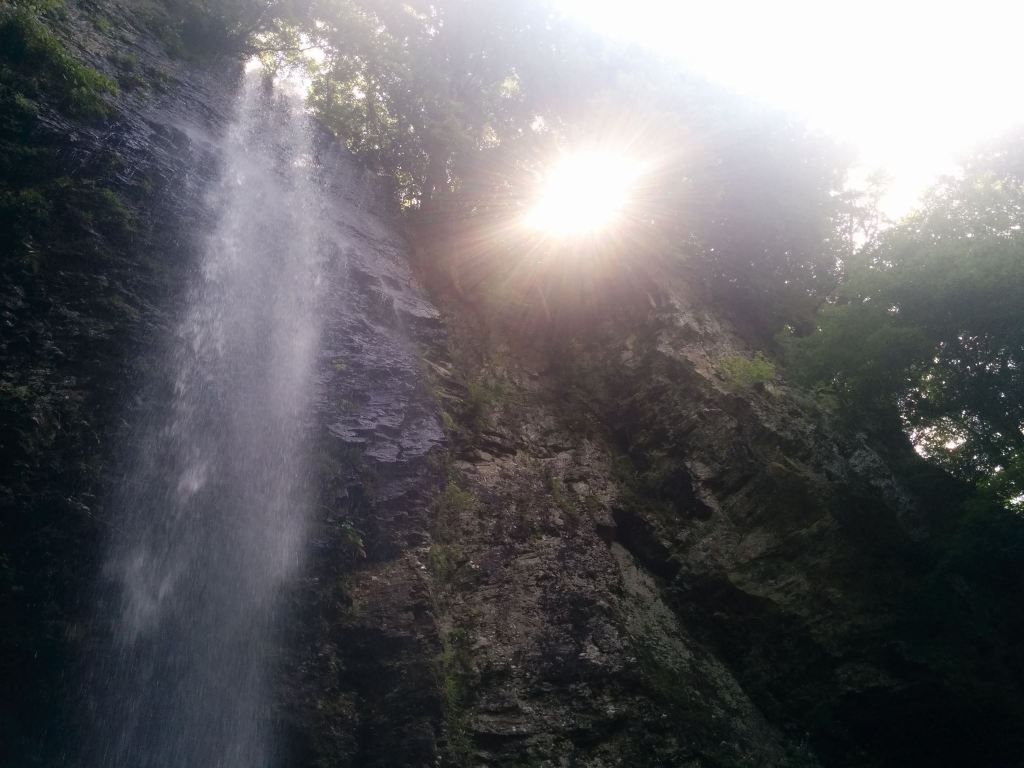
Otaki is in a realm of its own. I first came here back in 2007 to climb Ontake-san. This sacred peak was unlike any I’d climbed before. At the time I wrote, “shrines and gods of stone and brass cover her rugged body like scattered jewels.” These were signs of faith of the people below, symbols of the power residing in the mountain, flowing through nature itself.
Since then this place has always stuck with me. Finally, in spring of 2016, I moved to the village. Writing this, I’m looking out across the Otaki River Valley. The hills on the far side of the river are blushing a patchwork of early green, spotted by wild cherry trees in bloom. Winter was long this year, and the village is more than happy to be moving on.
Otaki is now re-inventing itself. Or rather, re-discovering what it’s always been. As one of the traditional gateways of pilgrimage to its holy sites, Otaki’s connection to Mt. Ontake is obviously deep. It’s even known in some circles as “Ontake-Otaki.” So, it has always recognized its dependence on the natural world. Like the rest of rural Japan though, a combination of plummeting birth rates and urban flight has led to a crisis: the village population now stands at about 650. Its school’s entire student body, from the 1st to 6th grades, consists of just a dozen students. With the majority of the residents being seniors, the population looks certain to fall further still.
Yet, in addition to being in one of Japan’s most beautiful and culturally interesting areas, the village has enormous potential as a spiritual and ecologically sustainable enclave whose influence far exceeds its size.
Otaki is a most unusual place, where the spiritual and the natural intertwine—a tiny village that’s working to renew itself for generations to come.

 Otaki Experience