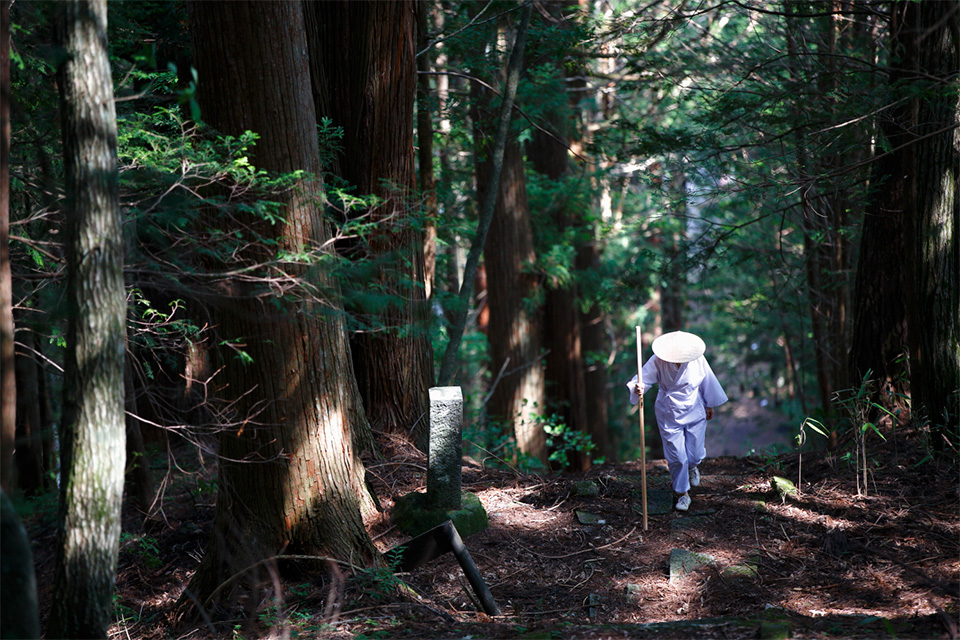
Spiritual practitioners have walked portions of the Ontake Pilgrimage Trail (also known as the Ontake Kodo (御嶽古道, lit. Ontake’s Old Road)) since at least the 9th century. Easily accessible from the Kiso Valley in Nagano Prefecture, much of the trail remains as it has been since ancient times.
Pilgrimage on Mt. Ontake
Back in the day, Sangaku-shinko, or “mountain devotion” was practiced widely in Japan in conjunction with local Shinto and early Japanese Buddhism. Mountains were known as the meeting points of heaven and Earth, and certain peaks were considered particularly numinous. Mt. Ontake was among these, and pilgrimage on the mountain along with its rituals and purification practices was believed to bring enlightenment. For hundreds of years, practice on Mt. Ontake was restricted to ascetics and priests. Then, in 1792, a priest called Fukan opened the trail from Otaki to ordinary people with the goal of making the mountain’s powers more widely available. In the following decades, its boons came to be associated with health, and faith in Mt. Ontake’s healing power spread throughout Japan. Today, believers still walk the Ontake Pilgrimage Trail to pray, purify themselves, and visit the many sacred places along the way.
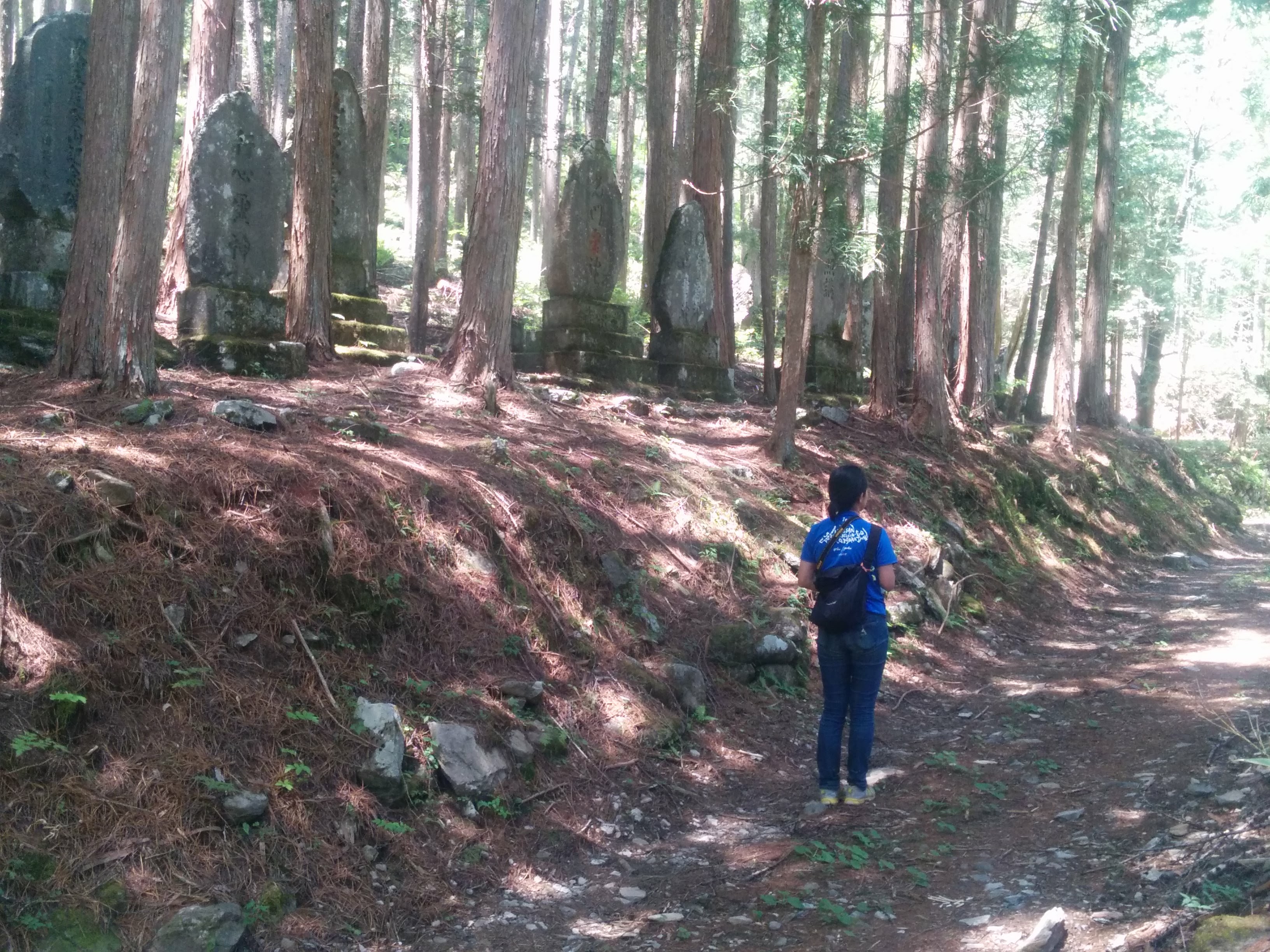
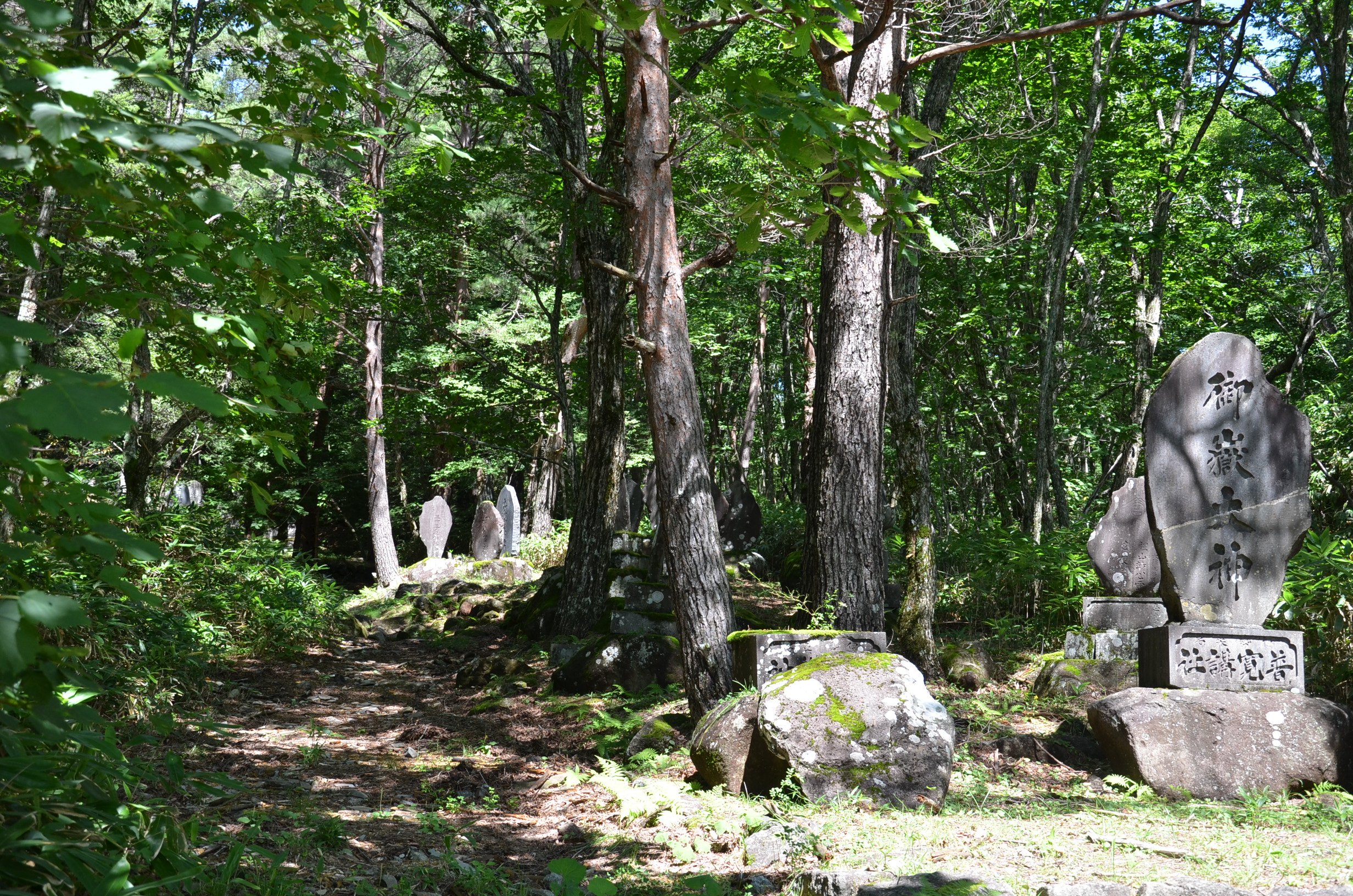
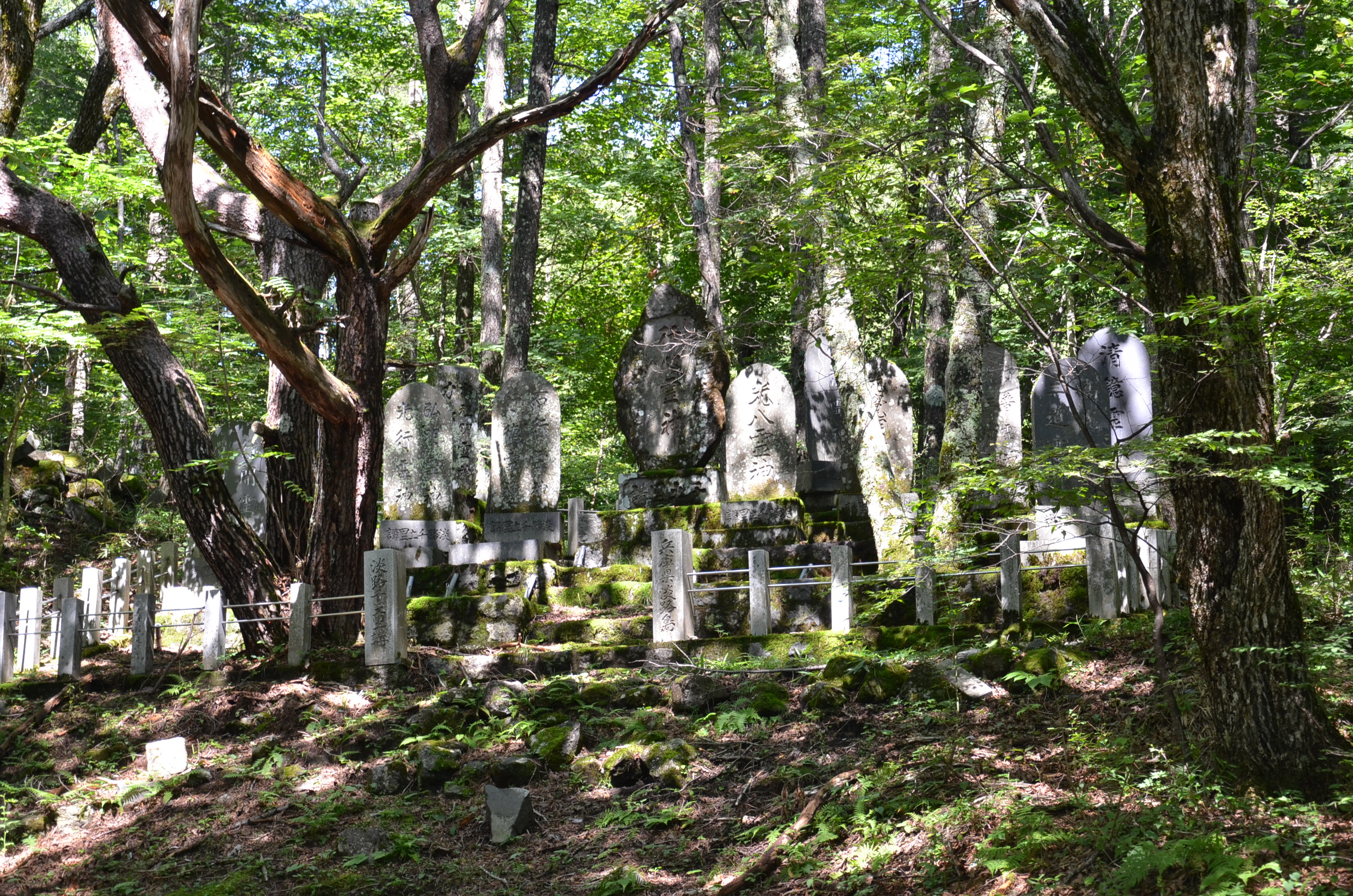
Today, much of the trail retains its historic feel, winding through cypress forests, skirting cliffs of volcanic stone pocked with caves once used for meditation, crossing mountain streams. It runs past Kiyotaki Falls and Shintaki Falls, where pilgrims have undergone purification rites since ancient times. Groups of reijinhi, stone stela set as monuments to Mt. Ontake’s spiritual practitioners, line much of the way, reminding visitors that this is no ordinary hiking trail. Certain areas along the way are known as “power spots,” nexuses in the landscape believed to impart energy and healing to those who come. Indeed, the atmosphere along the Kodo is at different parts peaceful, mystical, otherworldly, and sublime.
That said, like the Nakasendo, portions of it merge with modern roads. The Kodo starts in Otaki’s village center and historically ran nearly 15 kms to Mt. Ontake’s summit. There were 10 gome (pronounce go-may), or stations marking the journey up the mountain. Today, 9 of the stations remain (the 6th was removed in the 60s to make way for the ski field on the upper slopes of the mountain). The 10th station is located at the shrine on the peak above Otaki. The trail to the summit from Tanohara (the 7th station) officially opens July 10.
For most visitors, we recommend the Waterfall Trail. This loop takes anywhere from an hour and a half to three hours to walk and covers the 4th stage of the Kodo, including some of its more otherworldly scenery. It also takes in Otaki’s most sacred and spectacular waterfalls.
Stage one: First station to Ontake Satomiya Shrine
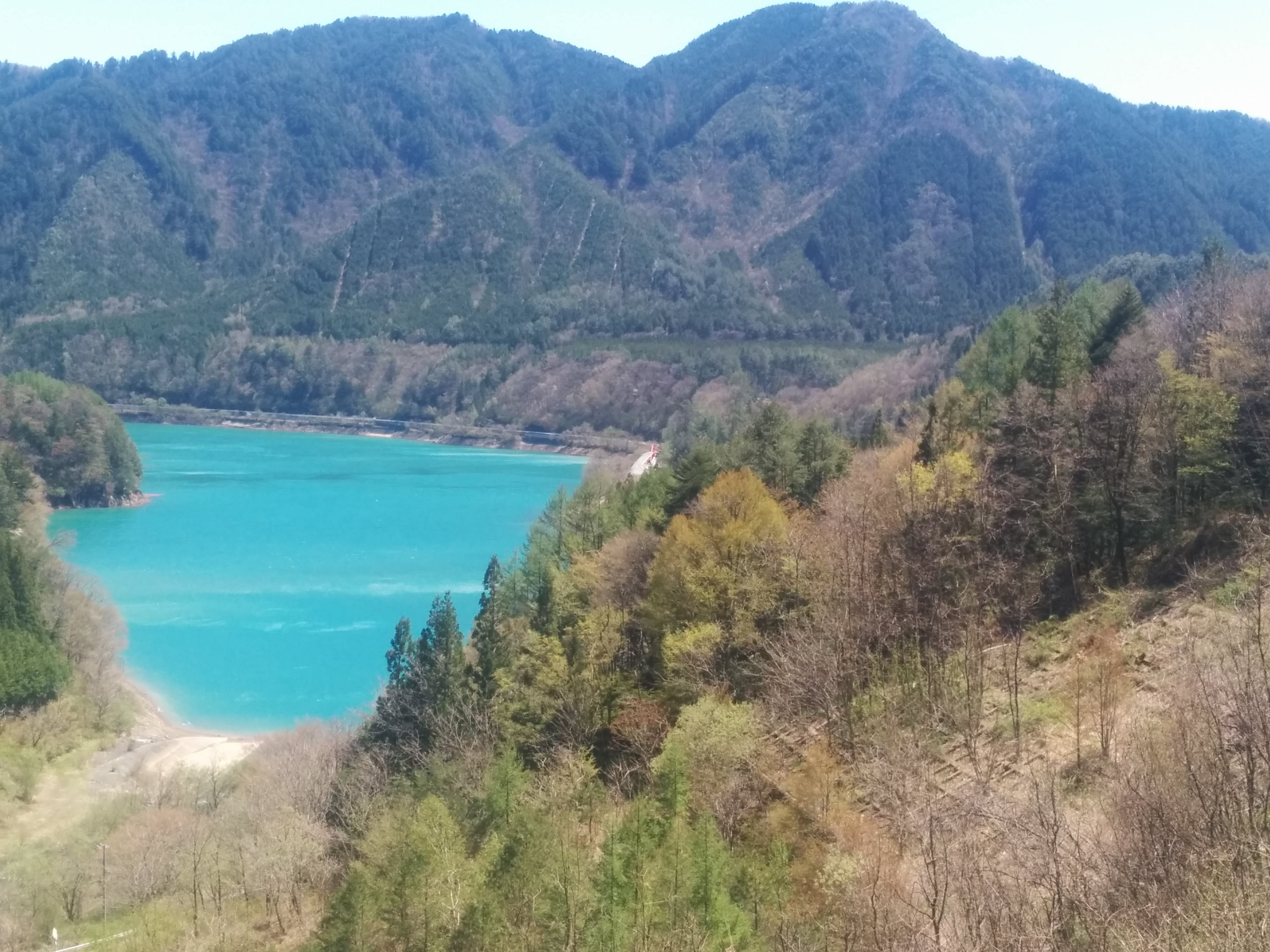
A stone post marking the start of the Kodo is located in front of the tourist info center. Ontake Satomiya Shrine is about a 1 km walk up the road. A visit there is essential to the start of any pilgrimage on the mountain. There’s a fantastic view of Lake Ontake along the way. Across the valley, a latticed concrete swath is a reminder of when the mountainside collapsed during an enormous earthquake in 1984.

Stage two: Satomiya Shrine to the second station
This kilometer walk along the roadway passes several groups of reijinhi, stones commemorating mountain ascetics who trained on Ontake-san. Important clusters surround Fukan-do, across from Kurumizawa Ryokan, and Isshin-do, across from Sakura Soba. Fukan-do is dedicated to Fukan-gyoja, the founder of the pilgrimage trail from Otaki. Isshin was his disciple and was responsible for the spread of the Ontake faith throughout 18th century Japan.
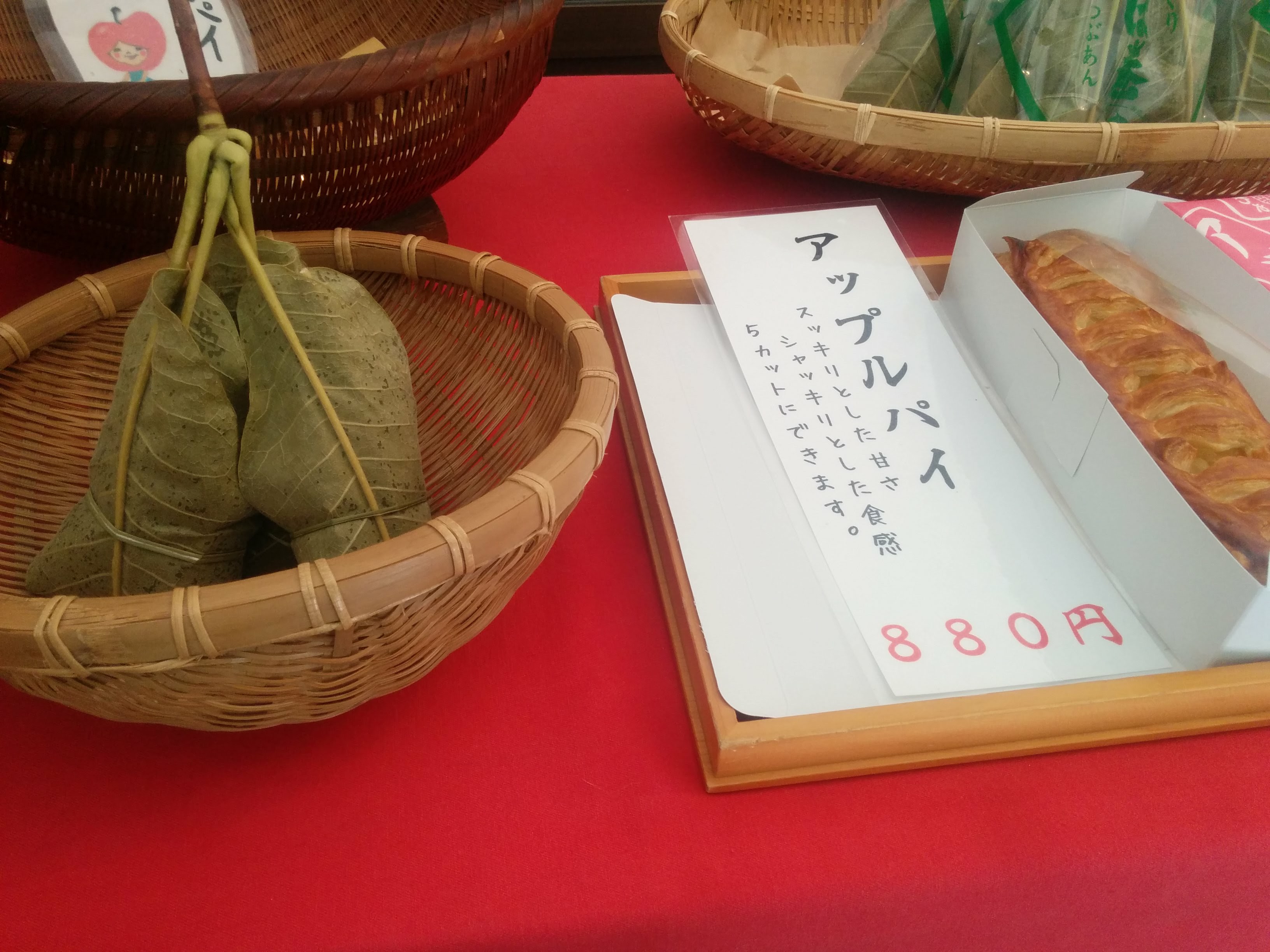
Sakura Soba is a great place to stop for lunch; made with Otaki’s pure water, they have some of the best buckwheat soba noodles in Kiso. As you approach the second station, on clear days you’ll see Ontake-san rising up ahead, the first view of the mountain on the route. If you’re not ready for lunch, the Himeya bakery there offers snacks like apple pie and local seasonal specialties like hobamaki.

Stage 3: Second to the third station
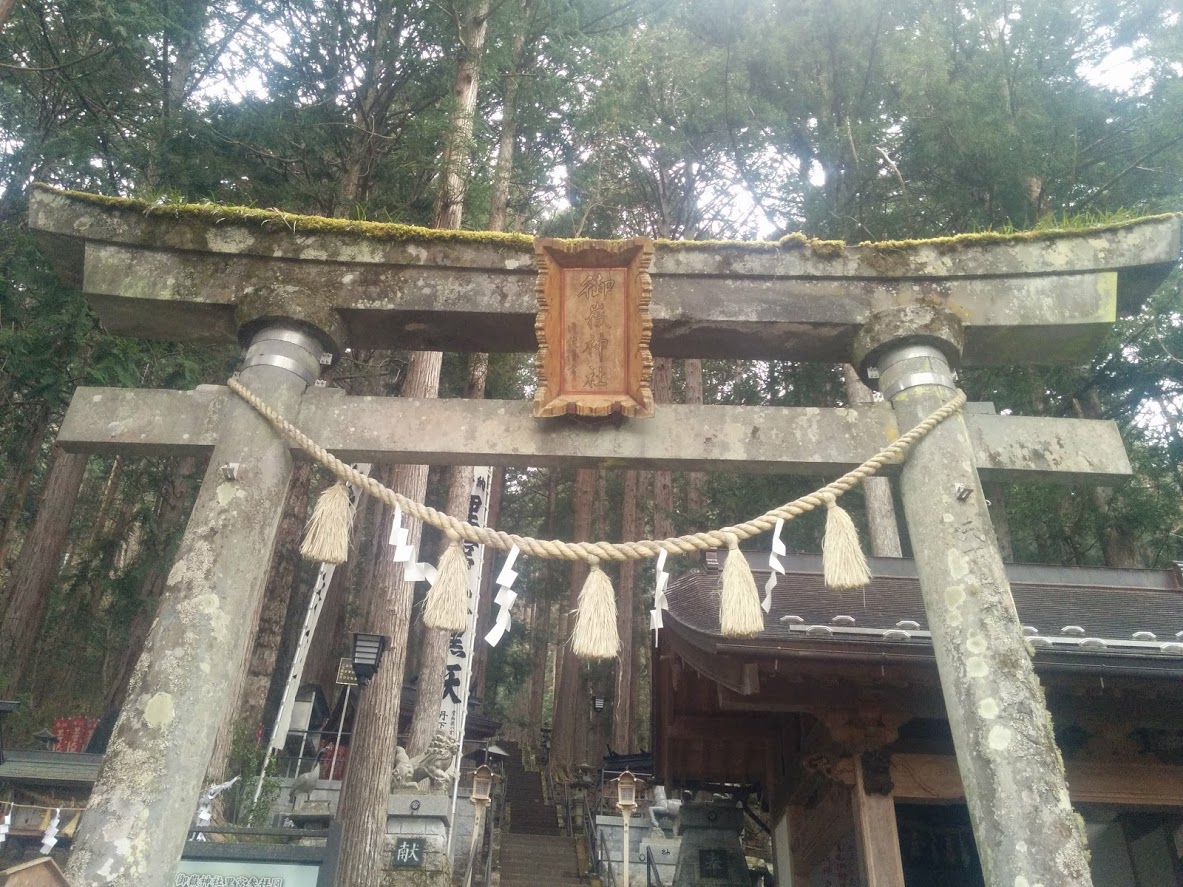
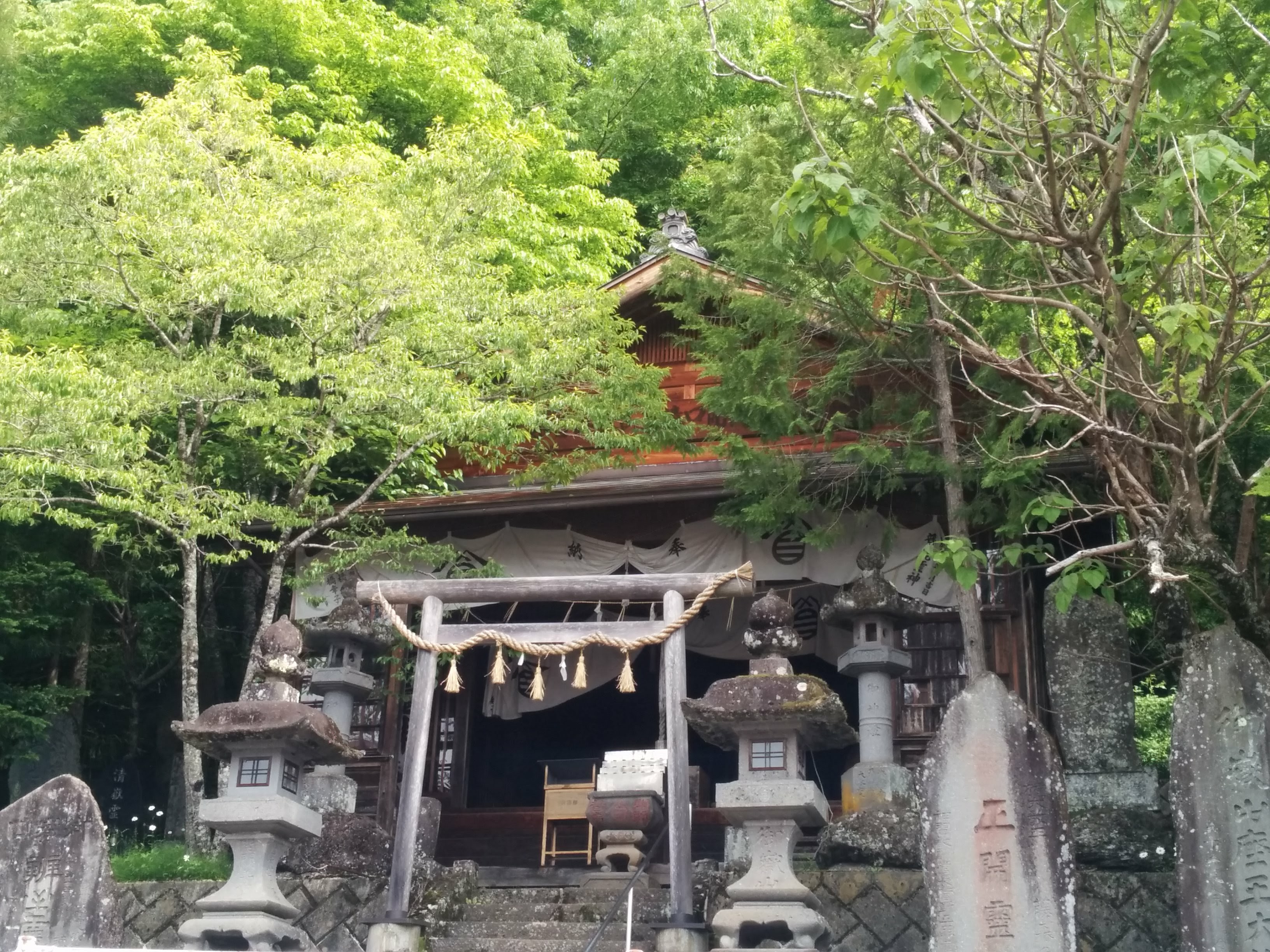
This pleasant section of the Kodo gets off the main road and meanders through pine and cypress forest and numerous stands of reijinhi. It rejoins the road for about 100 meters before arriving at the third station, the entrance to Omata Shrine. Pass through the torii gate and its surrounding reijinhi, and a steep flight of stone steps will bring you through a shadowy grove to the shrine. For some, rituals here were considered the equivalent of doing them on the summit of Mt. Ontake itself.
Just down from where the path rejoins the road, Mokusei-sha is a great spot to take a break and fuel up for Stage 4 with pizza, coffee, and more.


Stage 4: Omata Shrine to Ju-ni-gongen Shrine (4th station)
This stage is one of the most interesting and atmospheric of the whole Ontake Kodo. It starts at the entrance to Omata Shrine. This is also the first part of the Waterfall Trail; the second part circles back to the start via the famous purification sites of Shintaki Falls and Kiyotaki Falls.
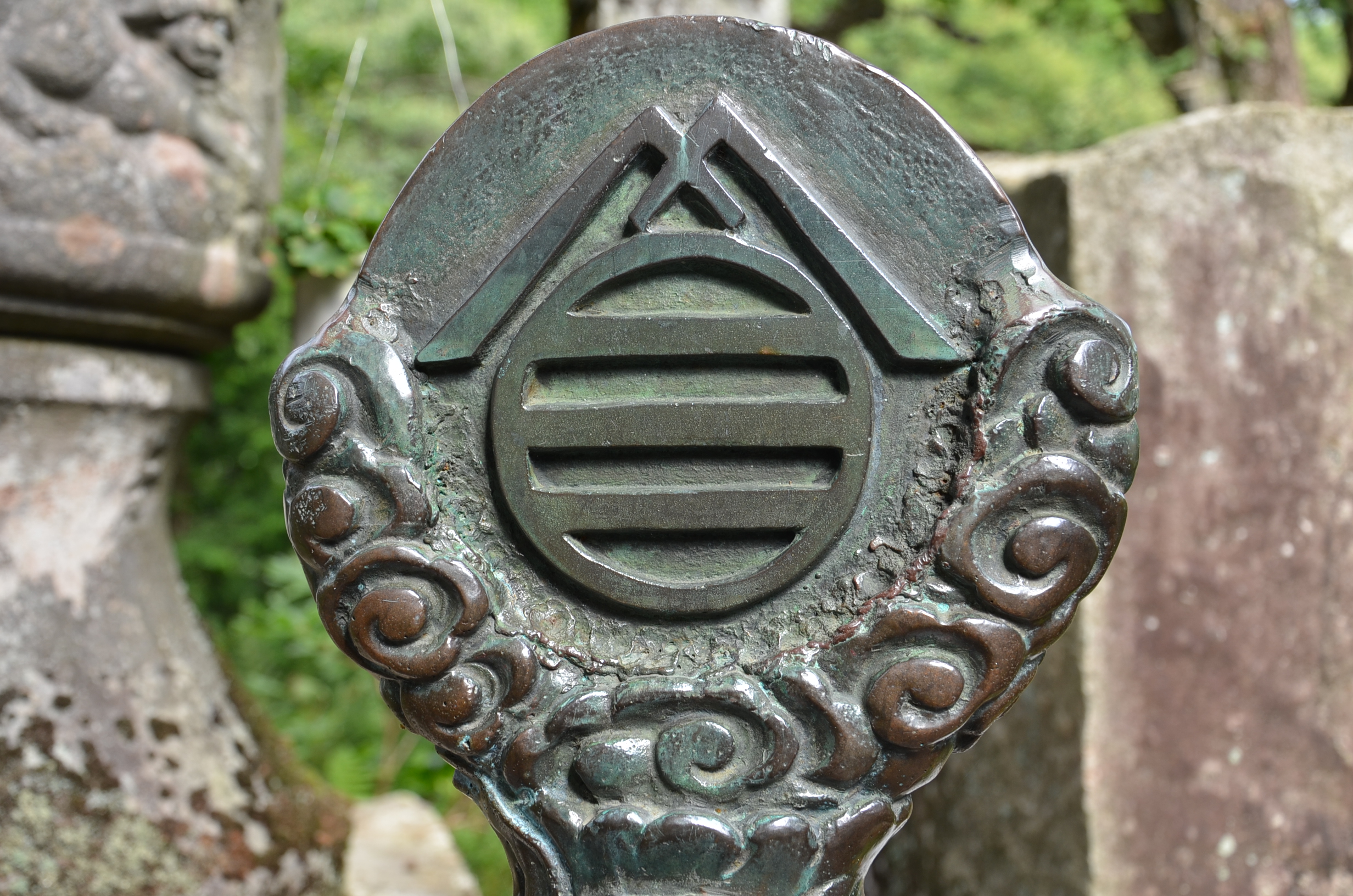
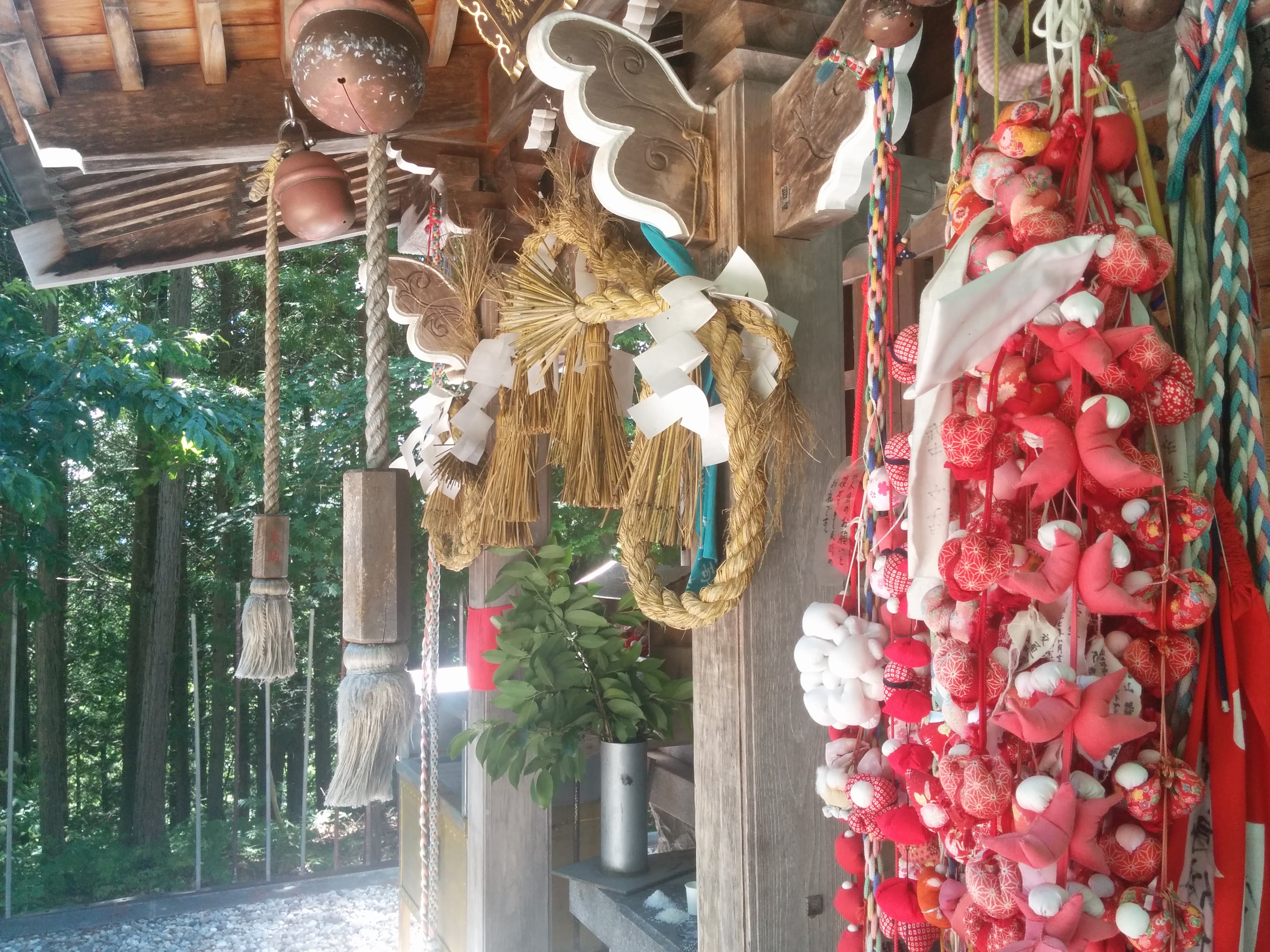
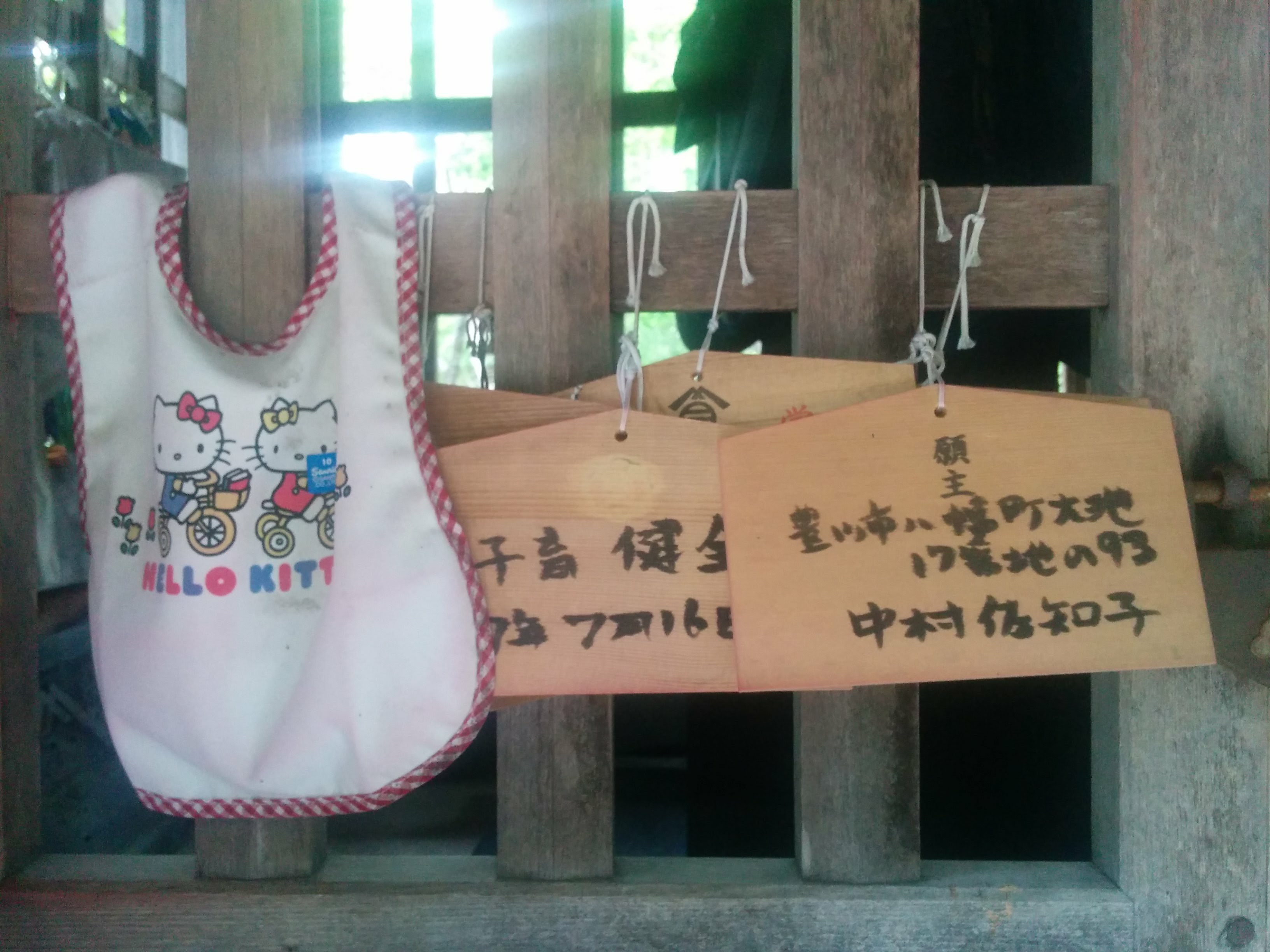
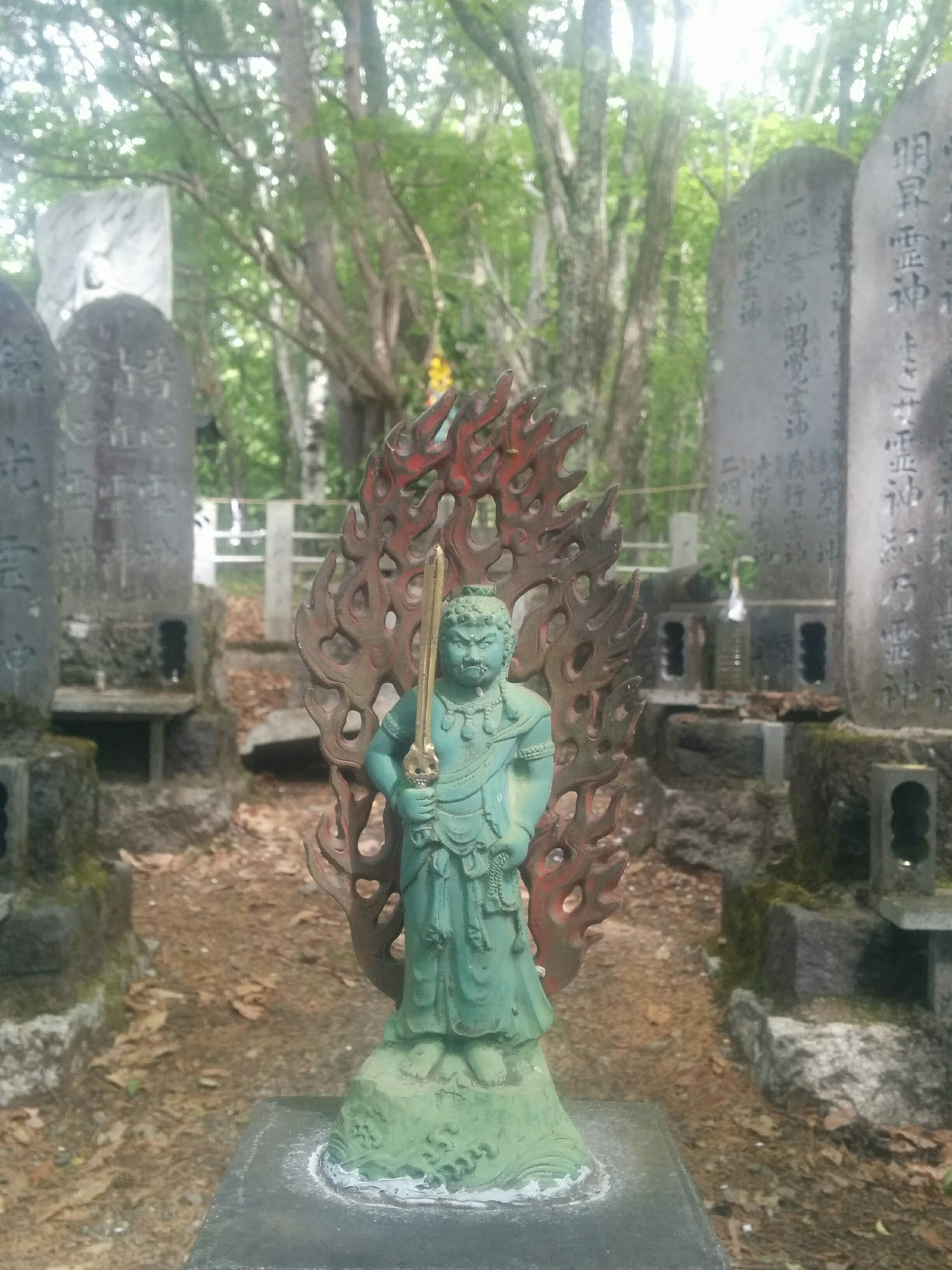
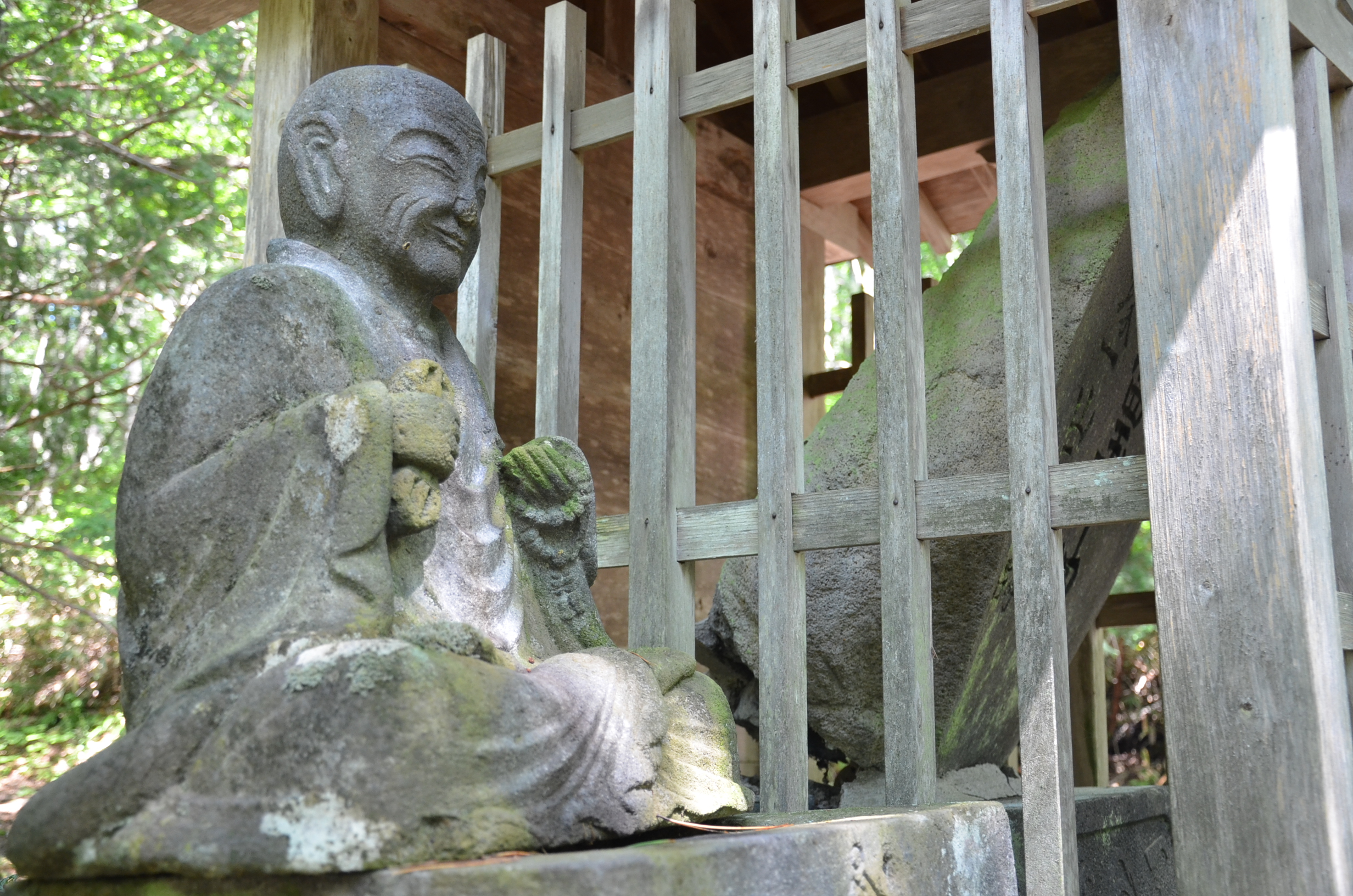
Ju-ni-gongen Shrine is locally famous as a power spot related to pregnancy, birth, and child-rearing. Take a look at the collection of reijinhi behind the shrine, and you’ll also find a pantheon of colorful deities that speak to Japanese Buddhism’s Indian roots.








Stage 5: Ju-ni-gongen Shrine to Hakkai-san Shrine (5th station)
The first part of this walk follows the road before crossing a parking lot and plunging into the woods for a long climb up to Hakkai-san Shrine. This part of the trail is difficult to follow in places, and generally has less to offer visitors than Stage 4. Still, if a long, atmospheric climb of a wooded trail lined with reijinhi is to your liking, you’d be following in the footsteps of hundreds of years of the faithful. Contact us for more information if you want to hike this part of the Kodo. That said, if you’re driving to Tanohara to hike the Final Stage of the Kodo, it’s worth stopping at Hakkai-san Shrine along the way.



Final Stage: Tanohara to the 10th Station
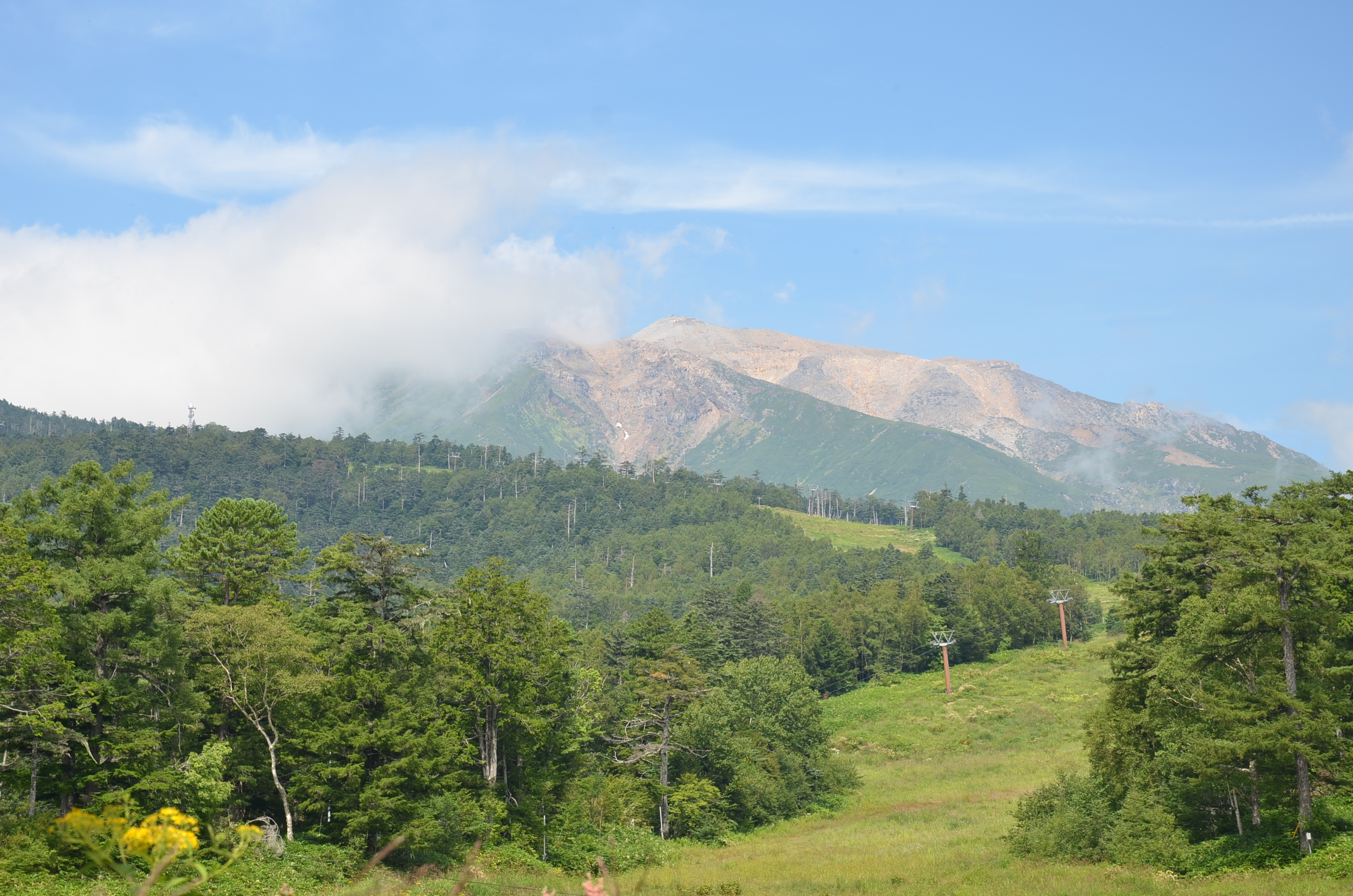
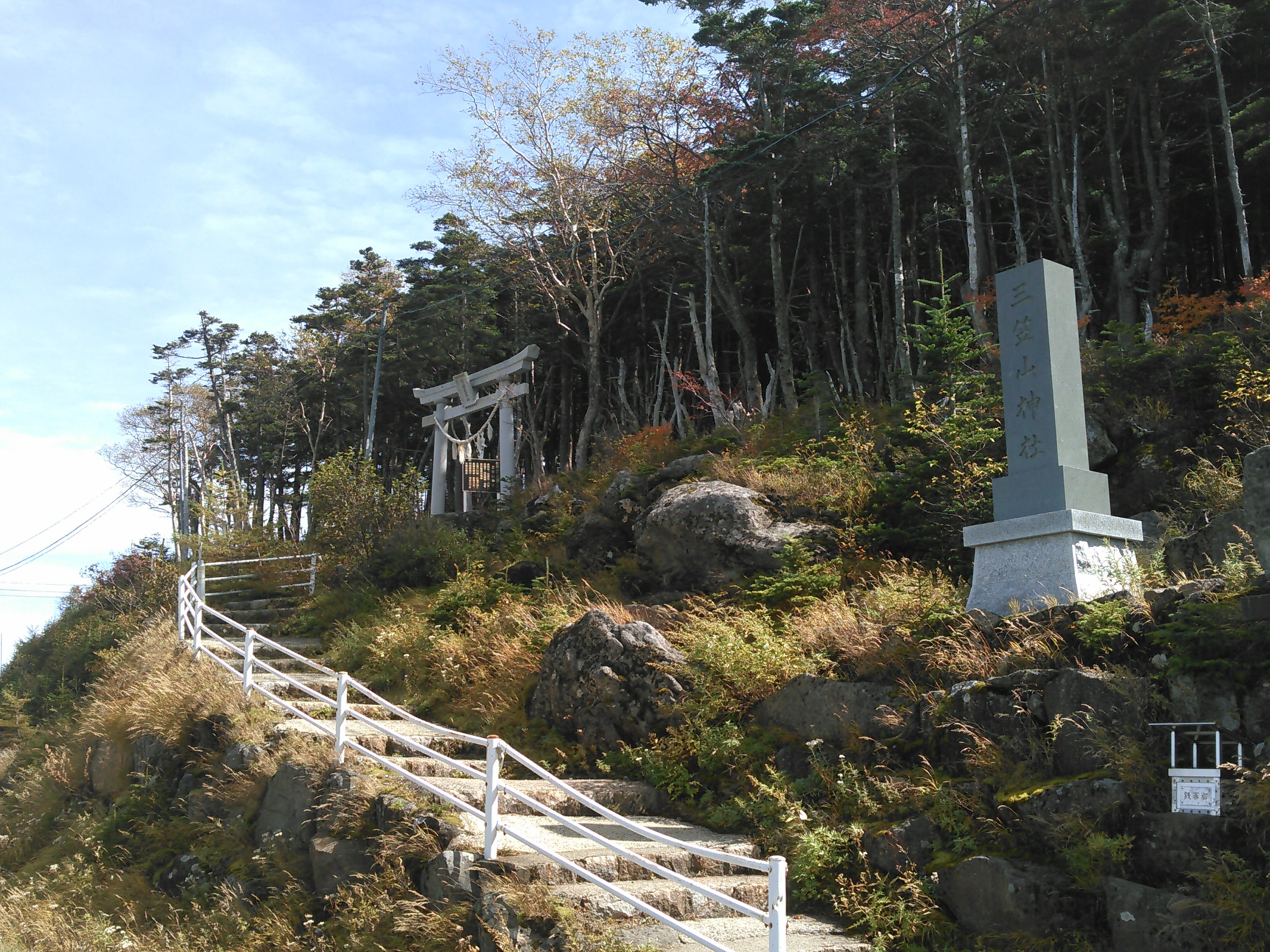
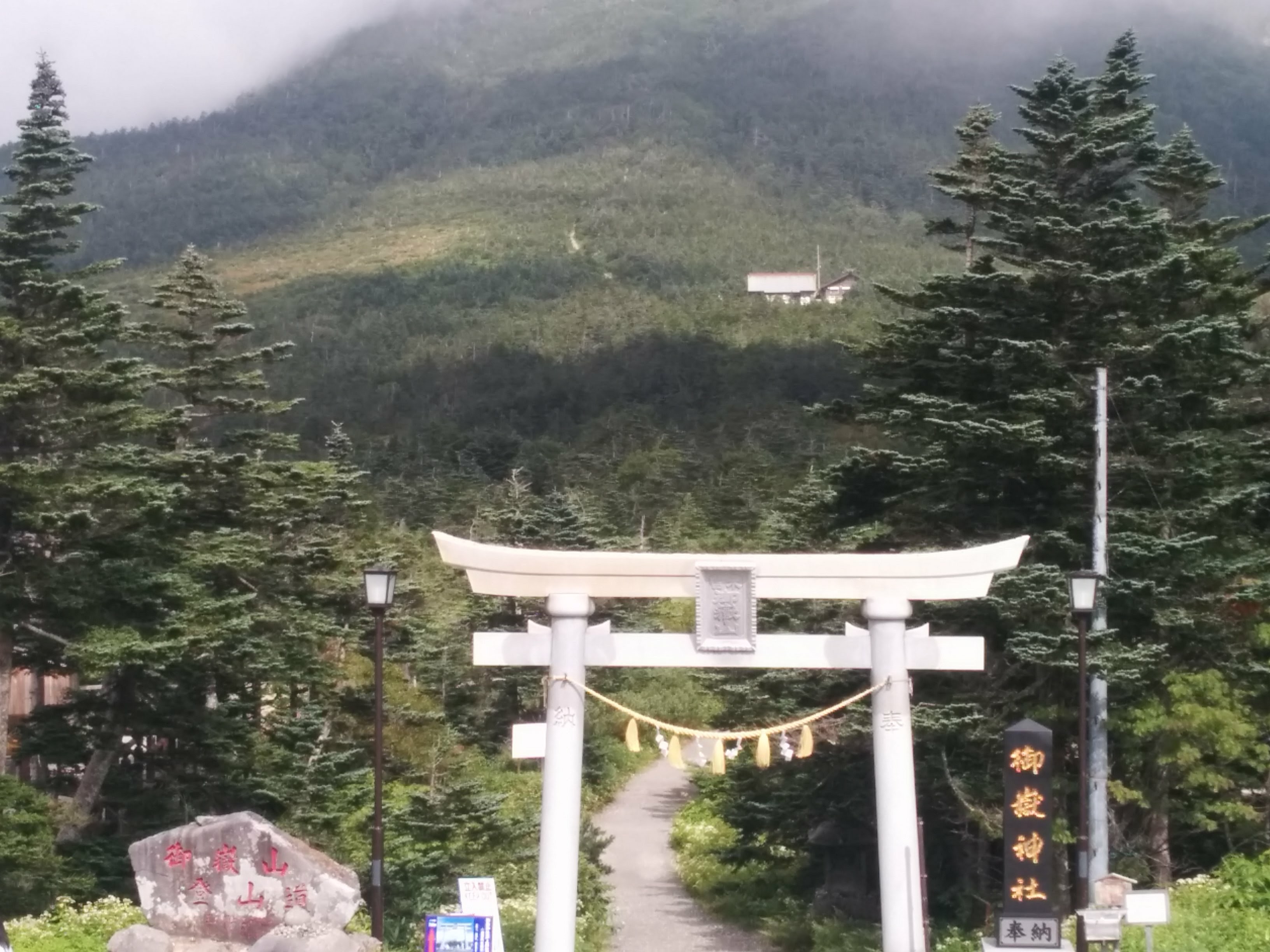
The 7th Station is Mikasa-yama Shrine, dedicated to one of the three principal gods of the mountain. You can access it via Tanohara, an area with a visitor’s center and pleasant boardwalks around the highland with Mt. Ontake soaring above. From there, the Kodo runs past ritual spots of the 8th and 9th stations before arriving at the 10th station, the shrine at Mt. Ontake’s peak.
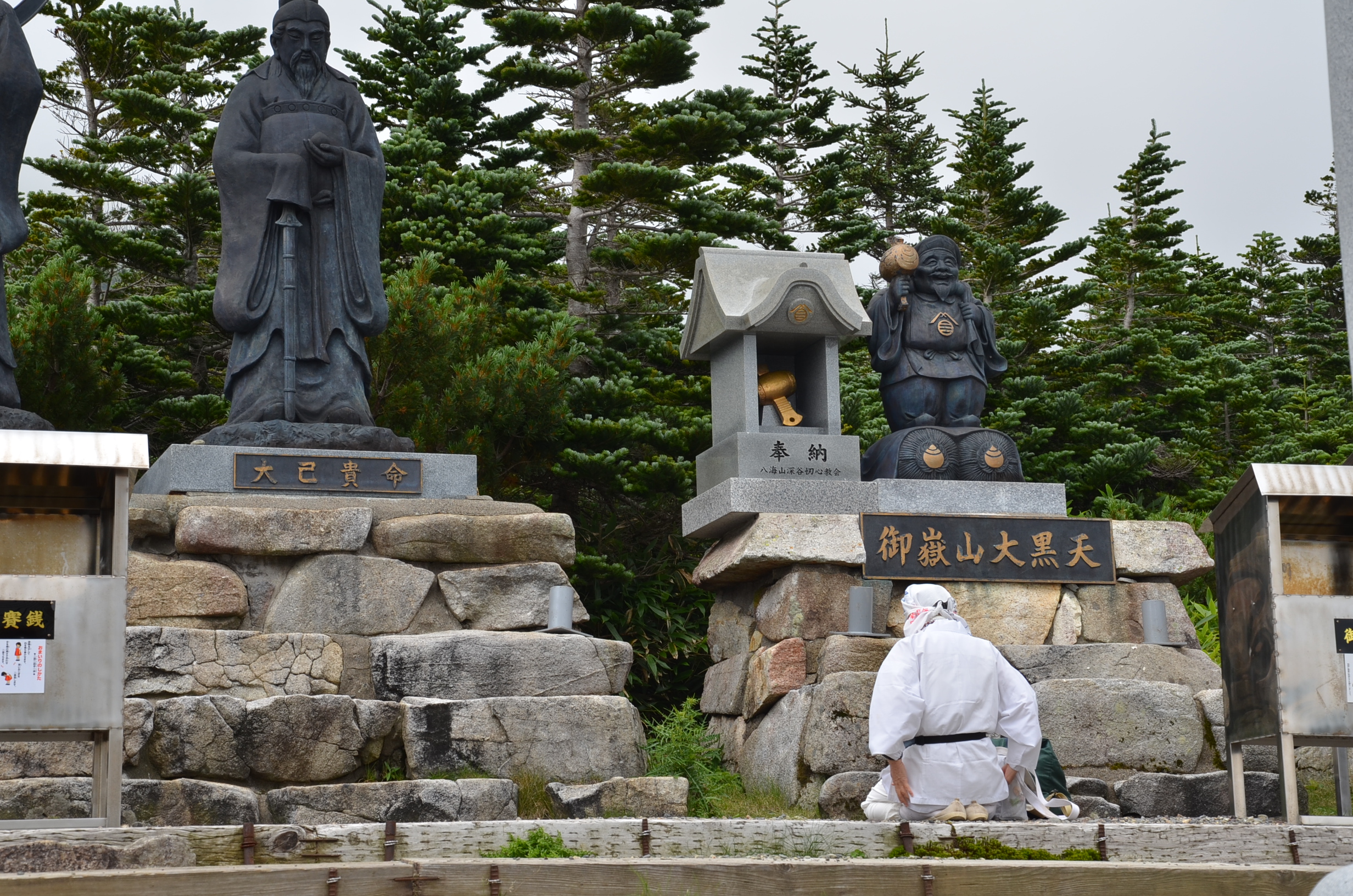
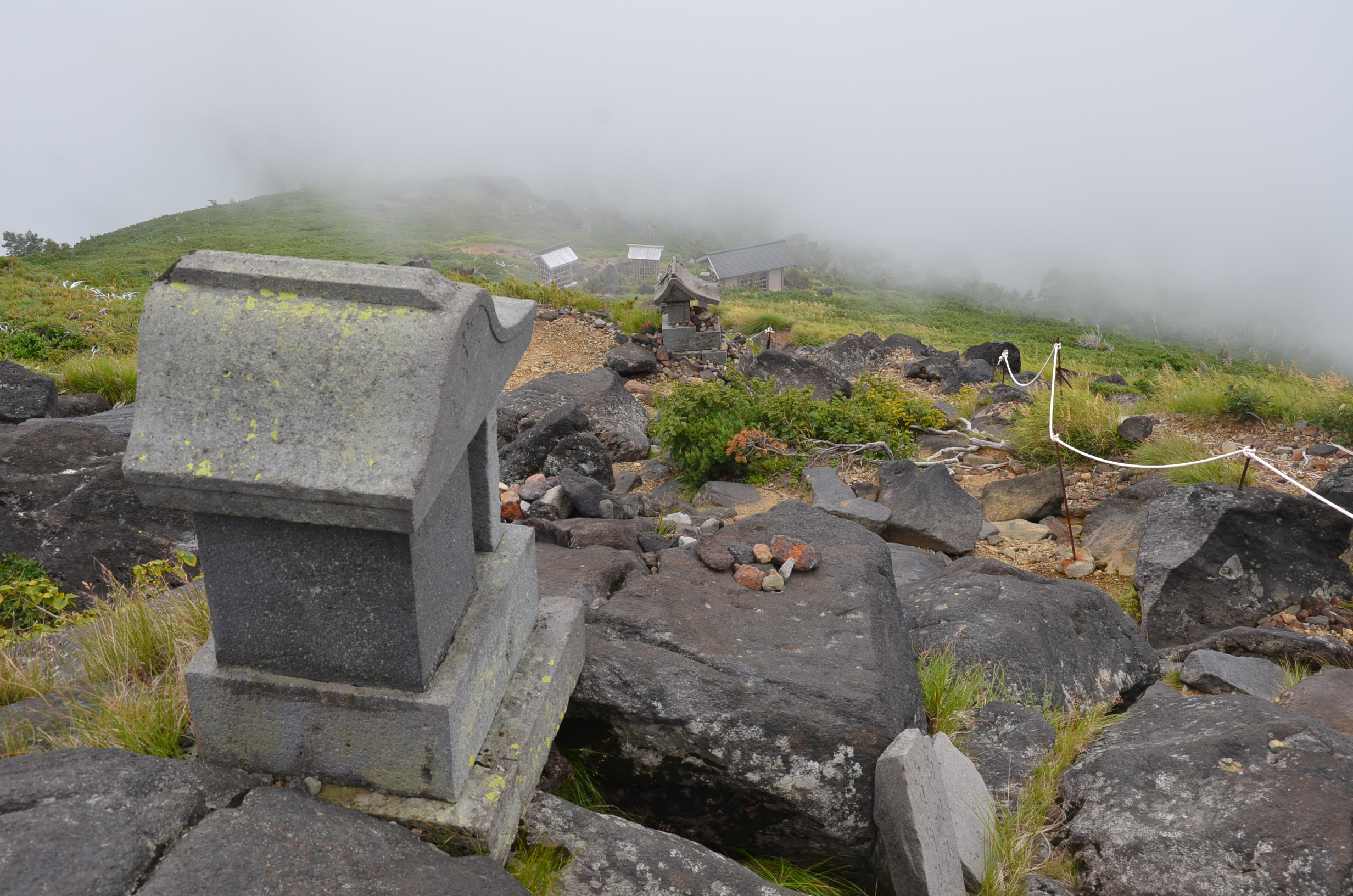
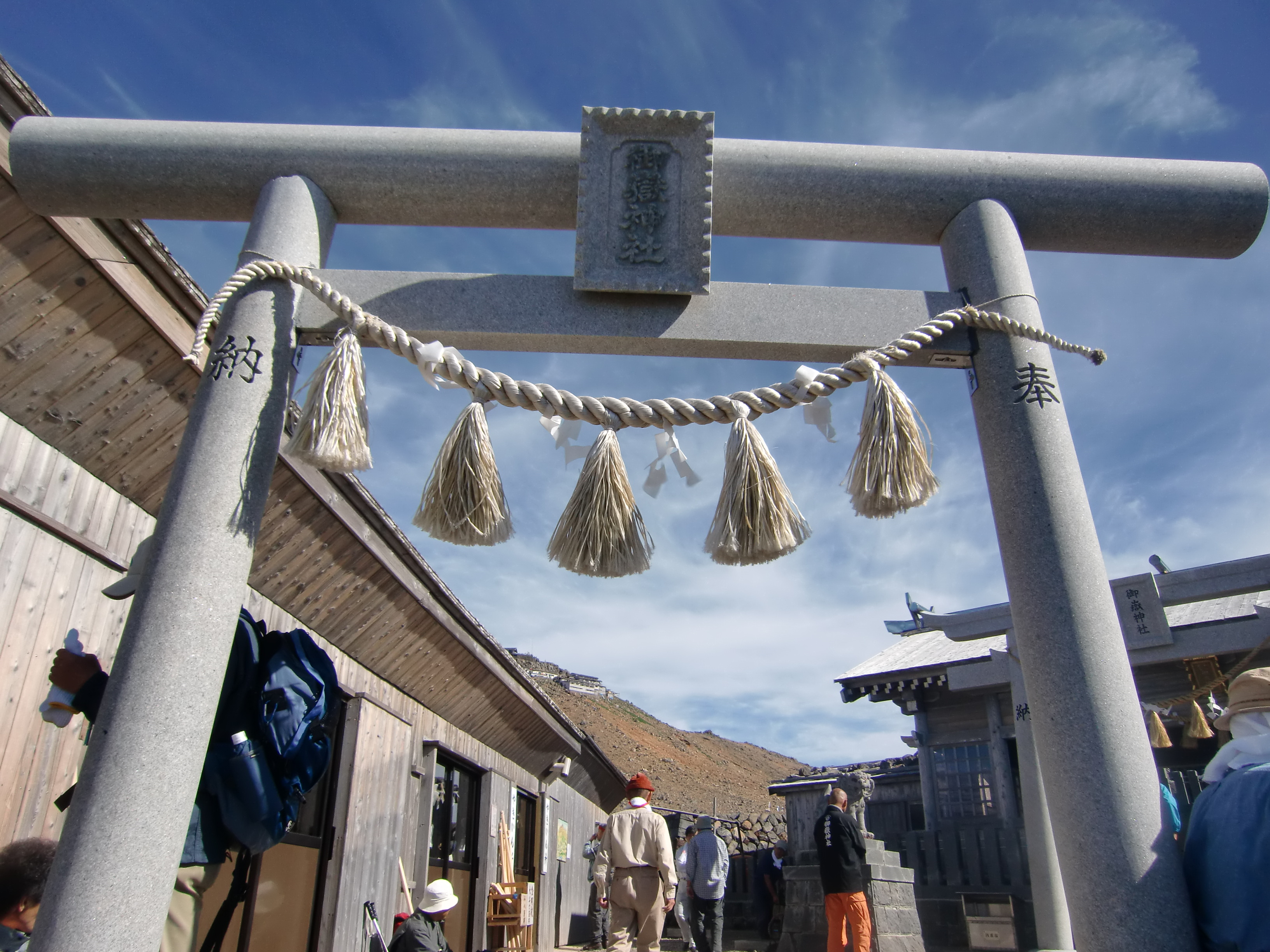
This stage ushers pilgrims into Mt. Ontake’s otherworldly volcanic alpine realm. The sacred sites around the summit, including its five crater lakes, form a mandala. Ni-no-ike is the highest alpine lake in Japan (though an eruption in 2014 largely filled it with ash). Visiting these spots is as important for many pilgrims as the rituals along the way.
The trail to the summit from Tanohara is open until October 15. Until then, there are limited buses to Tanohara from Kiso Fukushima Station via Otaki Village center and spots along the pilgrimage trail. See here for details.
Mt. Ontake is an active volcano and there have been climbing restrictions due to volcanic activity in recent years. See the Volcanic Mt. Ontake page for current conditions.




Header photo courtesy of Kiso Ontake Tourist Office
 Otaki Experience